
Talk to Your Guide: (605) 252-9100
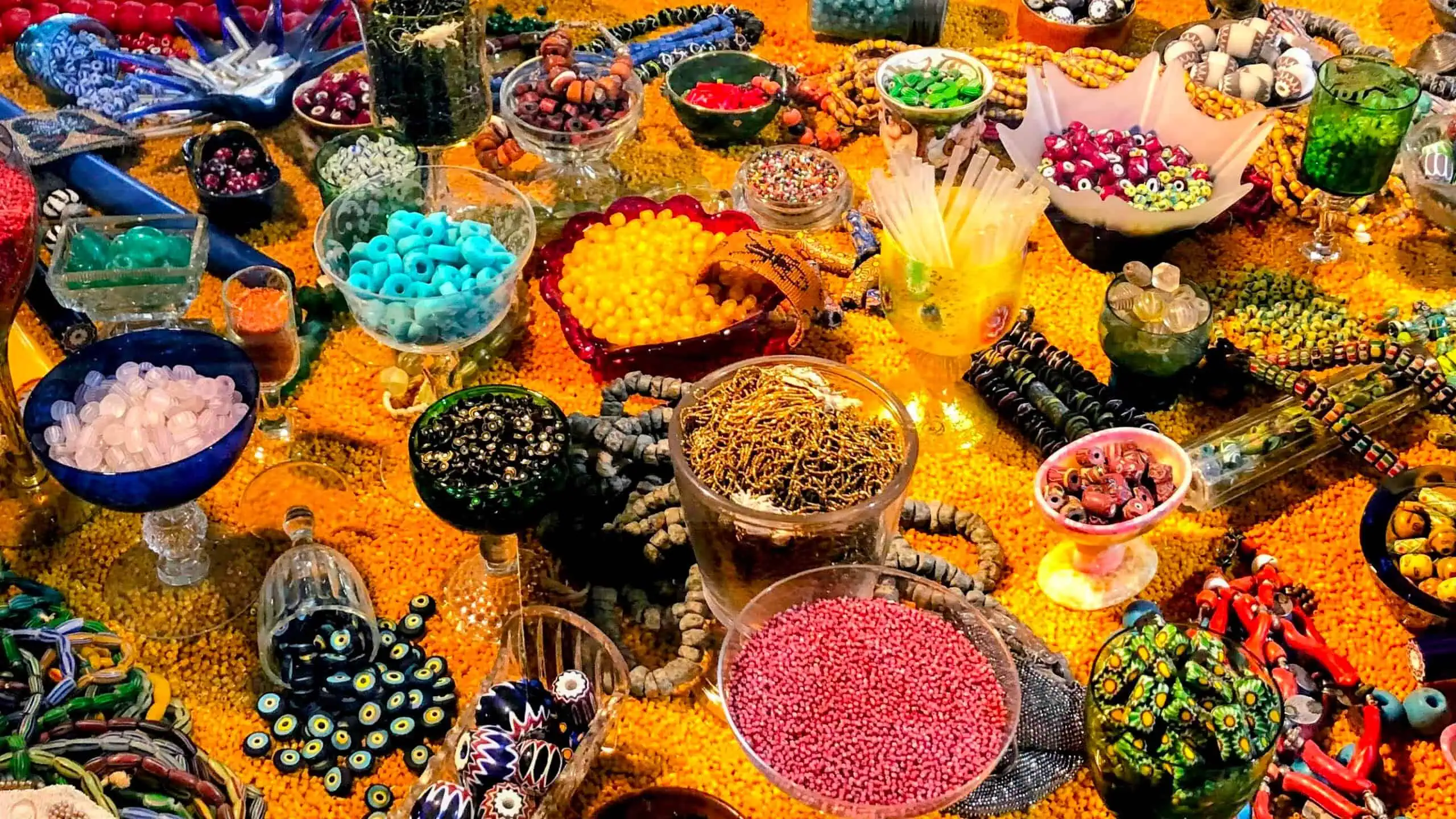
Beadwork, quillwork, ledger art, hide work, pipestone carving, and jewelry, plus where to shop in ways that support artists directly.
Beadwork display at Prairie Edge Trading Co. and Galleries, Rapid City, South Dakota. Photo by Daniel Milks.
Native American art in the Black Hills is living culture, not a souvenir category. The most meaningful pieces come from skilled hands, deep tradition, and artists and businesses that can name where the work comes from. This guide is built for visitors who want to understand what they’re seeing, shop respectfully, and support Native makers and Native owned businesses whenever possible.
Art forms explained: beadwork, quillwork, ledger art, hide work, pipestone carving, and jewelry
How to shop respectfully: what to look for, what to ask, and how to avoid imitation products
Where to shop: trusted Rapid City stops plus regional destinations that support artists directly
Artists to know: a starting list of Lakota artists and where their work shows up
Native art from the Northern Plains carries more than design. Many pieces reflect community style, family tradition, and lived experience. Even when a piece is created for sale, the technique and symbolism often come from practices developed for regalia, ceremony, and everyday life.
A strong piece usually shows:
Intentional design: patterns and colors chosen with care, not random decoration
Technical skill: even stitching, clean edges, and durable finishing
Material knowledge: hide, quills, beads, stone, and metal handled correctly
Artist attribution: a clear maker, not a vague “Native inspired” label
Each of these art forms has its own materials, techniques, and signs of quality. Knowing a few details makes shopping easier and helps visitors recognize real craftsmanship.
Beadwork is one of the most recognizable Native art forms in the region. Plains beadwork often uses tight, consistent stitching and highly controlled patterns. Quality beadwork usually shows even tension, clean lines, and careful finishing on the back.
What to look for
Even spacing and consistent bead tension
Clean edges and corners without gaps
A finished back that looks intentional, not rushed
Artist name and tribal affiliation when available
Common beadwork items
earrings, medallions, cuffs, barrettes
bags, pouches, and belt pieces
moccasins, vests, or regalia related items
Quillwork predates beadwork in the Plains tradition. Artists prepare porcupine quills by cleaning, softening, and dyeing them, then sewing or wrapping them into hide. It is slow, precise work that often takes serious experience to do well.


Quillwork by Jared Lanz.
What to look for
Smooth, consistent quill placement
Strong dye color with even tone
Clean symmetry and tidy finishing
Clear explanation of materials and process


Ledger art is narrative work, often created with ink, pencil, or watercolor on paper. It grew in importance during periods when artists adapted to new materials. Many ledger pieces tell stories through movement, horses, family history, ceremony, and daily life.
What to look for
Strong motion and storytelling
Consistent line work
A clear artist style, not generic clip art
Artist attribution and context
Hide work includes items made from hide as well as painted hides. Quality hide pieces show careful preparation, good stitching, and surfaces that were treated with skill. Painted hide work often reflects both traditional and contemporary storytelling.
What to look for
Even hide thickness and good finish
Stitching that is tight, clean, and durable
Paint that sits well on the surface, not flaking
Context about the meaning and use of the piece
Pipestone is culturally significant on the Plains, and pipestone carving can carry spiritual weight. Some items are purely artistic. Some are ceremonial. This is one category where respectful questions matter.
What to look for
A clear explanation of material and origin
Clean carving details and solid craftsmanship
Artist attribution
Guidance on cultural context when appropriate
Respectful buying is simple. The goal is to support Native artists and Native owned businesses, ask thoughtful questions, and avoid products that use Native style as a costume. Many Non-Native local artists have spent years learning traditional Native American arts, also contributing to the preservation of many art forms. Look for the artist name, history and background.
A practical shopping checklist
Ask for the artist name and tribal affiliation when possible
Ask where the item was made and what materials were used
Choose pieces with clear attribution over generic “Native inspired” items
Be cautious with ceremonial looking items and ask about context
When buying higher priced work, ask about care and long term durability
Rapid City is one of the best places in the Black Hills to shop for authentic Native American art, especially when choosing businesses that support artists directly and can share context about the work.
Best for: Native art, books, cultural gifts, and a gallery style browsing experience.
Why it’s worth the stop
Wide range of Northern Plains artists and art forms
A strong mix of gallery quality pieces and accessible gifts
Educational materials that deepen understanding
Time needed: 45 to 90 minutes
Best for: buffalo hide drums and Native art offerings connected to Lakota artists.
Why it’s worth the stop
Drums as functional art with strong visual presence
A good place for visitors drawn to music, powwow culture, and hide work
A different kind of art shopping experience than a gallery
Time needed: 30 to 60 minutes
Visitors who want a deeper connection often go beyond Rapid City and include places where Lakota art is created, taught, exhibited, and sold within community rooted settings. In this region, that can mean visiting Pine Ridge and other nearby locations where artists and cultural centers keep Indigenous art tied to living culture, not just tourism. These destinations offer stronger context, more direct support for artists, and a chance to learn alongside shopping rather than treating art as a quick stop.
Best for: learning, exhibitions, and buying art through a system that supports artists.
Why it’s worth the stop
A major center for Lakota art and culture
Hosts one of the most important Native American art shows in the region
Offers meaningful context for understanding the art forms on this page
Time needed: 60 to 120 minutes
Best for: Indigenous made arts, crafts, jewelry, and materials that support makers.
Why it’s worth the stop
Strong connection to local maker economy
A good place to find beadwork and regalia related materials
Useful for visitors who want to support artists and craftspeople directly
Time needed: 45 to 90 minutes
Native American arts are easier to appreciate when they’re connected to the living cultures and histories they come from. The Black Hills are not just a scenic backdrop for art shopping. They are a place with deep meaning, ongoing community ties, and stories that continue into the present. Learning a little context helps visitors recognize the difference between a decorative object and a piece of cultural expression created with purpose and skill.
This is also the simplest way to shop more respectfully. When visitors understand the basics of Indigenous history in the region, it becomes easier to ask better questions, choose authentic work, and avoid the mass produced “Native style” products that don’t support Native makers.
Instead of guessing, use a trusted learning source first. The Visitor Learning Center guide on Indigenous history and cultural perspectives offers a clear foundation for understanding the region, including why place matters, how traditions continue, and how visitors can show respect while exploring and shopping.
Evans Flammond Sr. is a Sicangu Lakota artist and enrolled member of the Rosebud Sioux Tribe. Born in Rosebud, South Dakota and raised on the Rosebud and Pine Ridge Reservations, he lives in Oglala, South Dakota with his family.
His work is best known for ledger art and hide painting, with a style that combines traditional Northern Plains themes with bold color, dense detail, and intricate linework.
Ledger art with precision linework
Flammond’s ledger drawings often use antique ledger pages as the ground, then build story and motion through tight, controlled lines. That intricate linework is one of the easiest signatures to recognize when viewing his pieces.
Hide painting and mixed media craft
His portfolio includes ledger art, hide paintings, and other media, reflecting the Northern Plains tradition of adaptable art forms that carry history forward while still evolving.
Presence in respected shows and collections
His work has been shown in venues and events that matter in this region, including Prairie Edge Trading Co. and Galleries in Rapid City and the Red Cloud Indian Art Show at Pine Ridge. His work is also held in notable collections including the Red Cloud Heritage Center, the Minnesota Historical Society, and the South Dakota State Capitol Collection.
This section highlights a starting set of Lakota artists to help visitors recognize names and styles and learn who is behind the work. This list can grow over time as more artists and Native owned businesses are added.
Dwayne “Chuck” Wilcox is an enrolled member of the Oglala Lakota and a lifelong artist based in Rapid City, South Dakota. He was born in Kadoka, South Dakota, served four years in the military, and built a full time art career without formal training.
Wilcox is best known for ledger style drawings that use the visual language of Plains narrative art to tell modern stories. Instead of treating ledger art as a historical look, he uses it to show contemporary Native life through humor, satire, powwow scenes, family moments, and everyday observations.
Sonja Holy Eagle is a Lakota artist and drum maker connected to Dakota Drum Company in downtown Rapid City. She was born in Eagle Butte, South Dakota, grew up on the Cheyenne River and Pine Ridge reservations, and is a self taught artist influenced by traditional art practices in her family.
Dakota Drum Company describes its buffalo hide drums and hand drums as hand painted by Lakota artist Sonja Holy Eagle, and notes that she is often in the store painting drums or hides.